Harsh Braking Alerts for teen drivers
A sensor in the tracker feels sudden stops. Each hard brake is logged with the time and place, which shows tailgating, late reactions and tricky intersections long before they cause a claim.
- Minutes to set uptypical setup time
- As long as the tracker is activehow long it runs
- Cities across the countrywhere we help
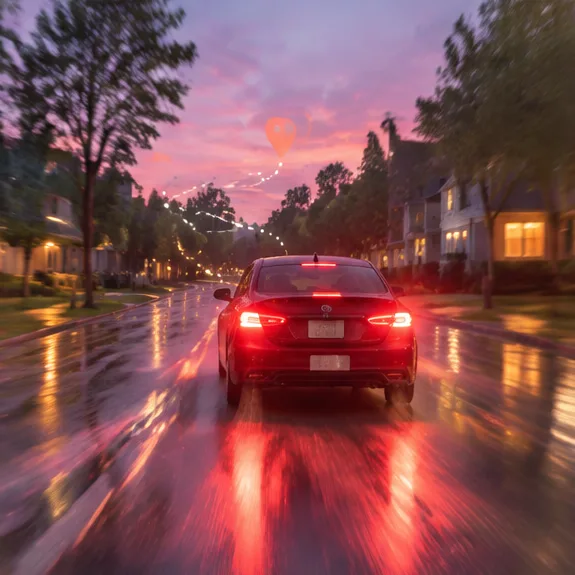
What you get with harsh braking alerts
- A sensitivity setting tuned for cars
- Events with time, place and speed
- Alerts you can send to a parent or the driver
- A map of where hard stops happen most
- Parents who worry about following distance
- Families who drive in busy traffic
- Parents who want to catch a bad habit early
Harsh Braking Alerts is one of the services parents ask about in cities from Nashville and Atlanta to Dallas, Chicago and Los Angeles. Most new-driver trouble starts with a few habits: speed, hard stops, quick turns and the phone. Alerts and scores show those habits early, so you can coach before a ticket or a crash.
From first call to first drive
Tell us about your driver
Call or send the form with your teen's car and what worries you most: speed, curfew, phones or just not knowing. We ask a few easy questions and suggest a setup.
Pick the right tracker
Plug-in for speed, hidden hardwired for a lasting install, battery for older or shared cars. Each family gets the device that suits the car.
Set the family rules
You choose speed limits, curfew, places and who gets alerts, and we help you write a short driving agreement your teen helps shape.
Watch, coach and relax
See the car on your phone, get a calm weekly report and loosen the rules as your teen earns trust. Real people answer when you have questions.
Harsh Braking Alerts: quick answers
Can a pothole set it off?
It can, so events are shown on the map. A pattern at one spot often points to a road problem rather than a driving problem.
What should I say to my teen?
Ask what happened rather than accusing. Many hard stops are a lesson about following distance, not a punishment.
Related services
- Teen driver serviceNo. 14
- Teen driver serviceNo. 15
- Teen driver serviceNo. 18
Harsh Braking Alerts near you
- Nashville, TN
- Franklin, TN
- Murfreesboro, TN
- Memphis, TN
- Knoxville, TN
- Chattanooga, TN
- Louisville, KY
- Lexington, KY
- Bowling Green, KY
- Atlanta, GA
- Charlotte, NC
- Raleigh, NC
- Birmingham, AL
- Huntsville, AL
- Charleston, SC
- Greenville, SC
- Savannah, GA
- Asheville, NC
- Washington, DC
- Baltimore, MD
- Philadelphia, PA
- Pittsburgh, PA
- Richmond, VA
- Virginia Beach, VA
- New York, NY
- Boston, MA
- Buffalo, NY
- Newark, NJ
- Jacksonville, FL
- Miami, FL
- Orlando, FL
- Tampa, FL
- Tallahassee, FL
- Fort Lauderdale, FL
- New Orleans, LA
- Baton Rouge, LA
- Little Rock, AR
- Mobile, AL
- Houston, TX
- Dallas, TX
- Austin, TX
- San Antonio, TX
- Fort Worth, TX
- El Paso, TX
- Oklahoma City, OK
- Omaha, NE
- Tulsa, OK
- Chicago, IL
- Columbus, OH
- Cleveland, OH
- Cincinnati, OH
- Detroit, MI
- Indianapolis, IN
- Kansas City, MO
- Minneapolis, MN
- St. Louis, MO
- Phoenix, AZ
- Denver, CO
- Las Vegas, NV
- Salt Lake City, UT
- Los Angeles, CA
- San Diego, CA
- San Francisco, CA
- Seattle, WA
- Portland, OR
Ready for a safer first year?
Call or send the form. You get a clear quote after a few quick questions.